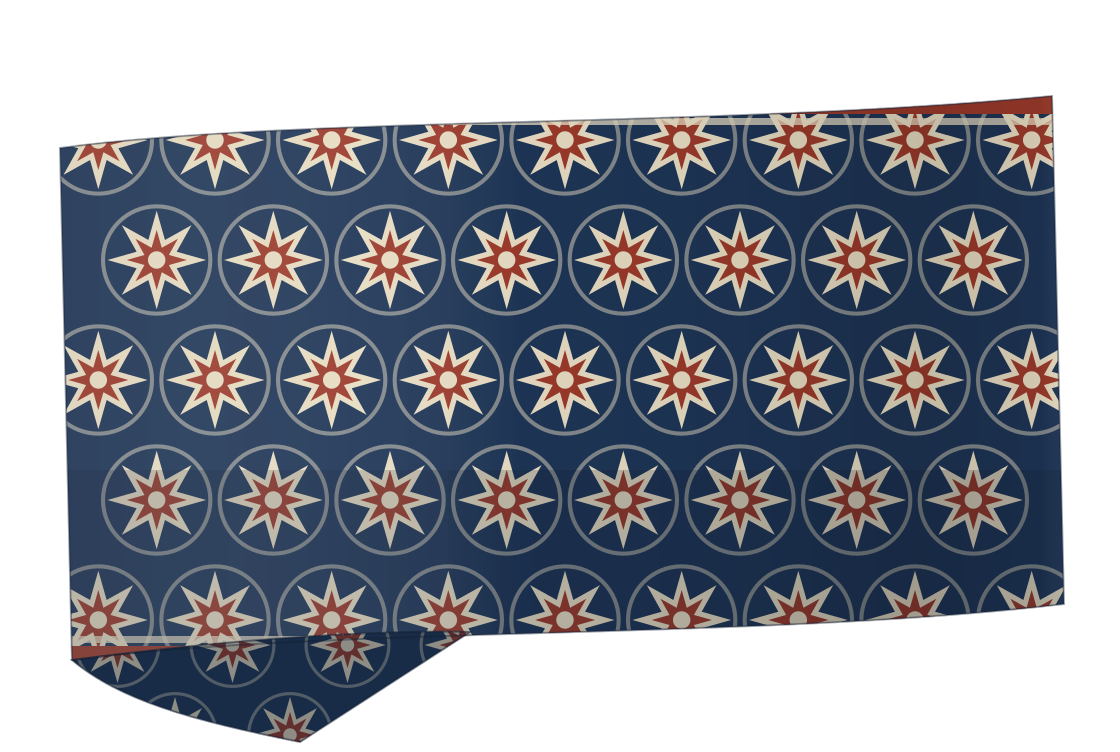
Ajrakh cotton throw
the object
Printed on both faces in register, which is the whole difficulty of Ajrakh. The cloth has to be turned and printed again with the same blocks landing in the same places from the other side. Held to the light there is no wrong side.
Sixteen stages, most of them followed by a wash. That is why it arrives soft: it has been through water enough times to have given up any stiffness before you ever see it.
Indigo and madder deepen for the first few washes and then hold. Wash cool, dry out of direct sun, and expect the first wash to run a little.
- Dimensions
- 1400 × 1000 mm. Printed on both faces.
- Material
- Cotton, indigo, madder, iron
- Finish
- Washed between every stage, so it arrives soft rather than crisp.
- Variation
- Register is judged by eye at each of sixteen stages; a hairline offset somewhere in the cloth is normal and is not a fault.
- Lead time
- Eight weeks, and longer in the monsoon when nothing dries.
the tradition
Ajrakh block printing
Ajrakhpur
Every block has to land inside the one before it.
Ajrakh is printed in sixteen stages, on both faces, in exact register, and washed in the river between most of them. Resist paste, mordant, indigo, madder, wash, dry, and again. A finished length has been wet and dry more times than it has been printed.
The geometry is not ornament laid over the cloth. It is the printing system made visible: every block has to land inside the one before it, and the pattern is the record of that happening correctly a few hundred times in a row. Ajrakhpur itself is a new village, built after the 2001 earthquake, sited for its water.
the maker
Junaid
Printer, 26 years, Ajrakhpur.
He mixes the madder darker than his father did, so the red sits closer to the indigo.
This object is not yet for sale.
Join the list and we will write when the first collection opens. Once, and about that.
from the same shelf