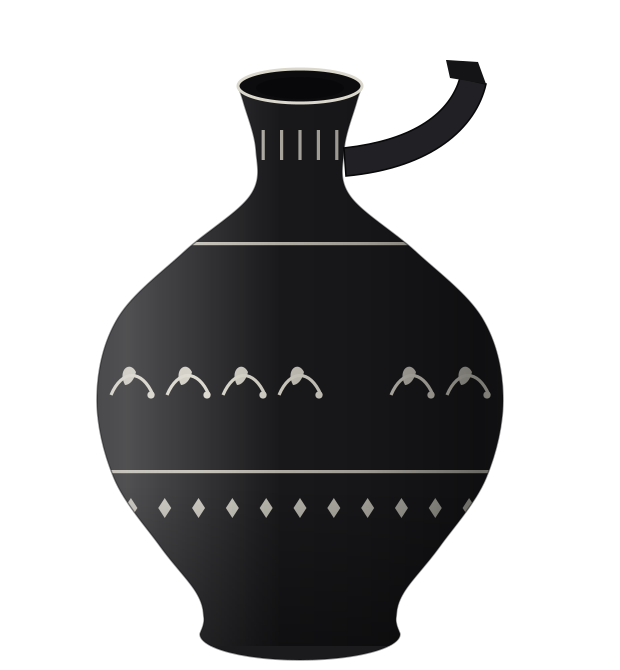
Bidri pouring vessel
the object
Cast, then cut. The pattern is chiselled into the alloy before any silver goes near it, and each channel is undercut slightly so that the wire, once hammered in, cannot lift out again. There is no solder anywhere in the piece.
The vine running round the belly is not a repeat. It is drawn by hand as the vessel turns in the lap, and on this one it breaks part-way round and starts again from a different leaf.
The black will not rub off, because it is not on the surface. It is the surface. Wash it in water, dry it, and leave the silver alone; it stays bright without polishing.
- Dimensions
- 232 mm high, 148 mm at the widest point. Holds roughly 900 ml.
- Material
- Zinc-copper alloy, pure silver inlay
- Finish
- Matte black, raised by soil. The silver is left bright and will not tarnish against it.
- Variation
- The vine is cut freehand, so its spacing shifts around the belly of each vessel.
- Lead time
- Six to eight weeks.
the tradition
Bidriware
Bidar
The contrast is made by the ground, not by a coating.
Bidriware is named for Bidar, and it cannot really be made anywhere else. The body is cast in an alloy of zinc and copper, chiselled with the pattern, and inlaid with silver wire hammered into the cuts. Then it is buried, in soil taken from the grounds of Bidar fort.
The salts in that particular soil blacken the alloy and leave the silver untouched, so the contrast is produced by the ground itself rather than by any coating. Workshops have tried the process with soil from elsewhere. It does not work.
the maker
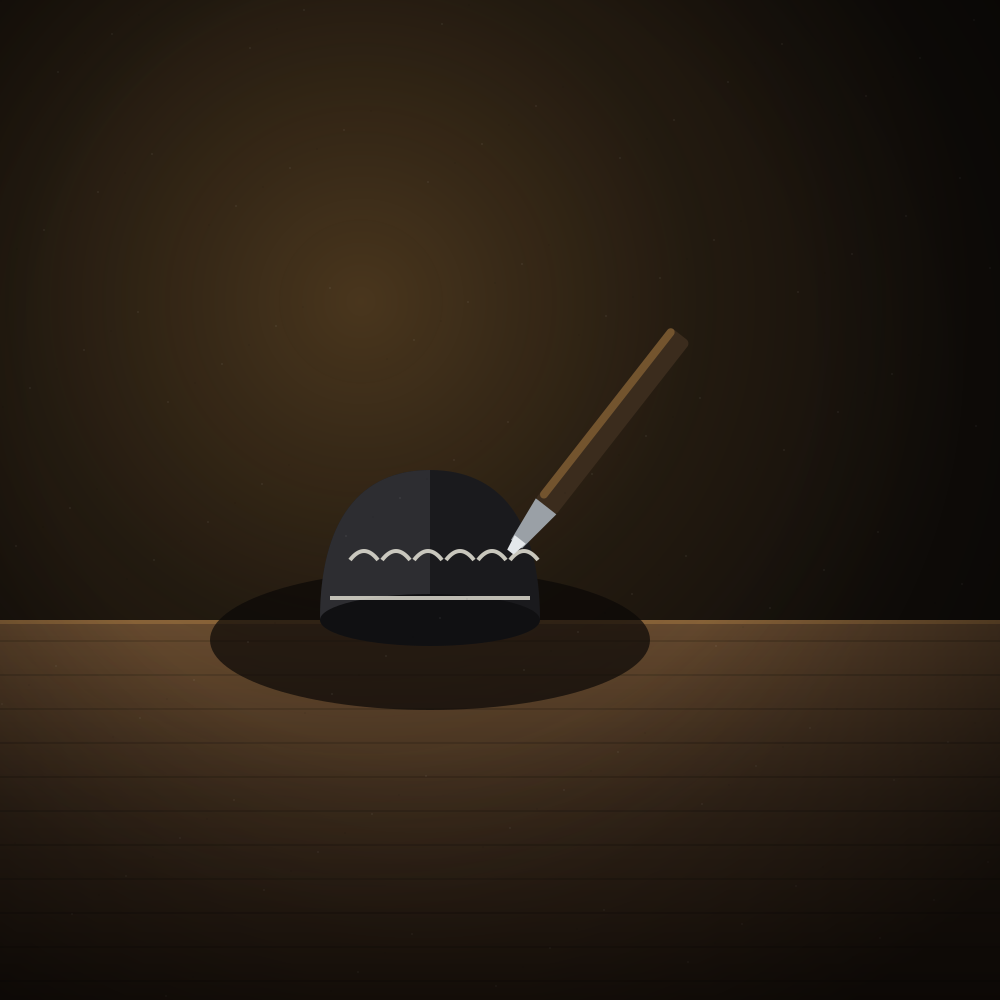
Sha Dilawar
Inlayer, 30 years, Bidar.
The vine on this vessel breaks rather than repeats, a decision he makes freehand, part-way round.
This object is not yet for sale.
Join the list and we will write when the first collection opens. Once, and about that.
from the same shelf