Navalgund jamkhana
the object
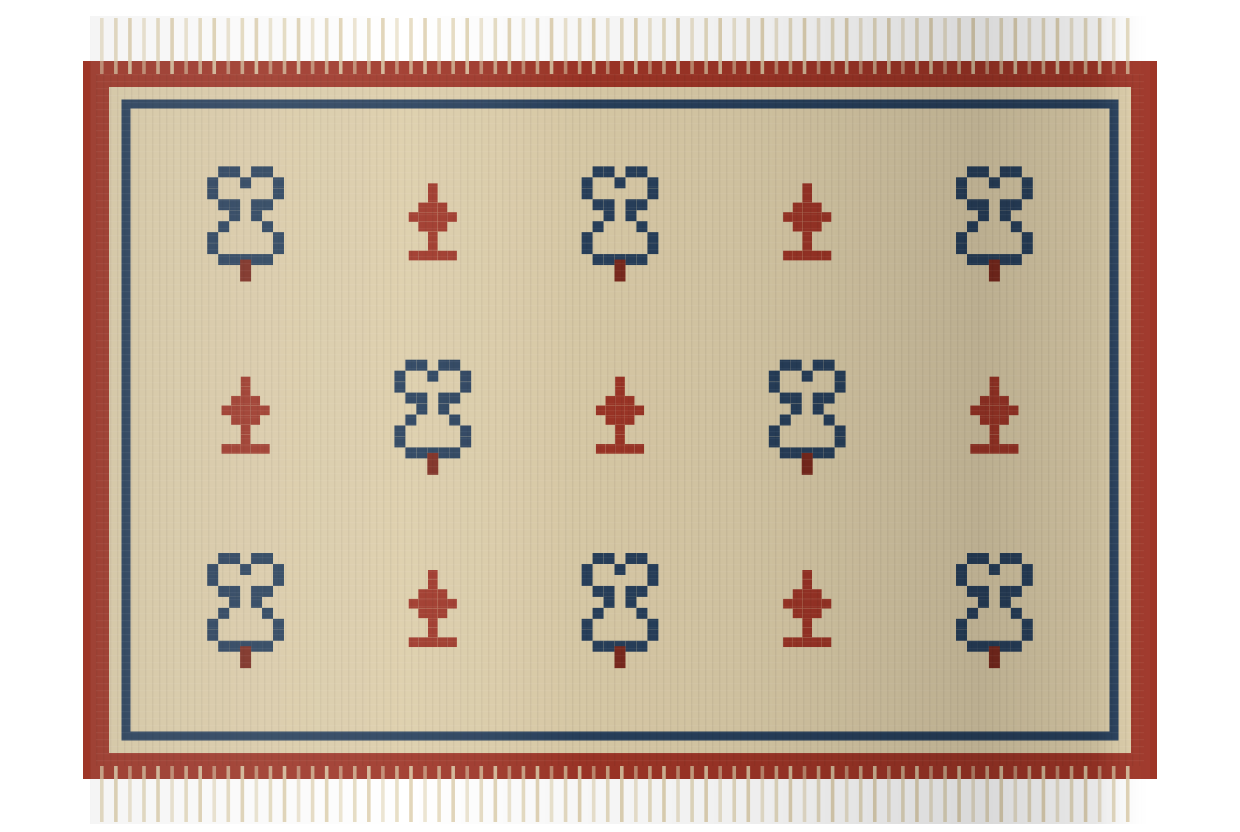
A flat cotton weave with no pile and no backing, which means it is reversible, washable, and thin enough to sit under a door. It is heavier in the hand than it looks.
The birds and lamps are built out of squares because the weave permits nothing else. Every diagonal is a staircase if you put your eye close enough. Counting is done from memory at the loom, not from a drawn plan, so the field of one rug never quite matches another.
Colours are natural dyes on undyed cotton and will soften with washing. The fringe is the warp itself, knotted; it is structural, not trim.
- Dimensions
- 1220 × 820 mm, plus 55 mm of fringe at each end.
- Material
- Cotton, natural dye
- Finish
- Flat weave, reversible. No pile, no backing.
- Variation
- Motifs are counted from memory rather than from a cartoon, so no two jamkhanas carry the same number of birds.
- Lead time
- Ten to twelve weeks. One rug is several weeks on the loom.
the tradition
Navalgund durrie weaving
Navalgund
What looks like stylisation is arithmetic.
The jamkhana came to Navalgund from Bijapur several centuries ago and stayed, woven on pit looms almost entirely by women and passed down inside households rather than through workshops.
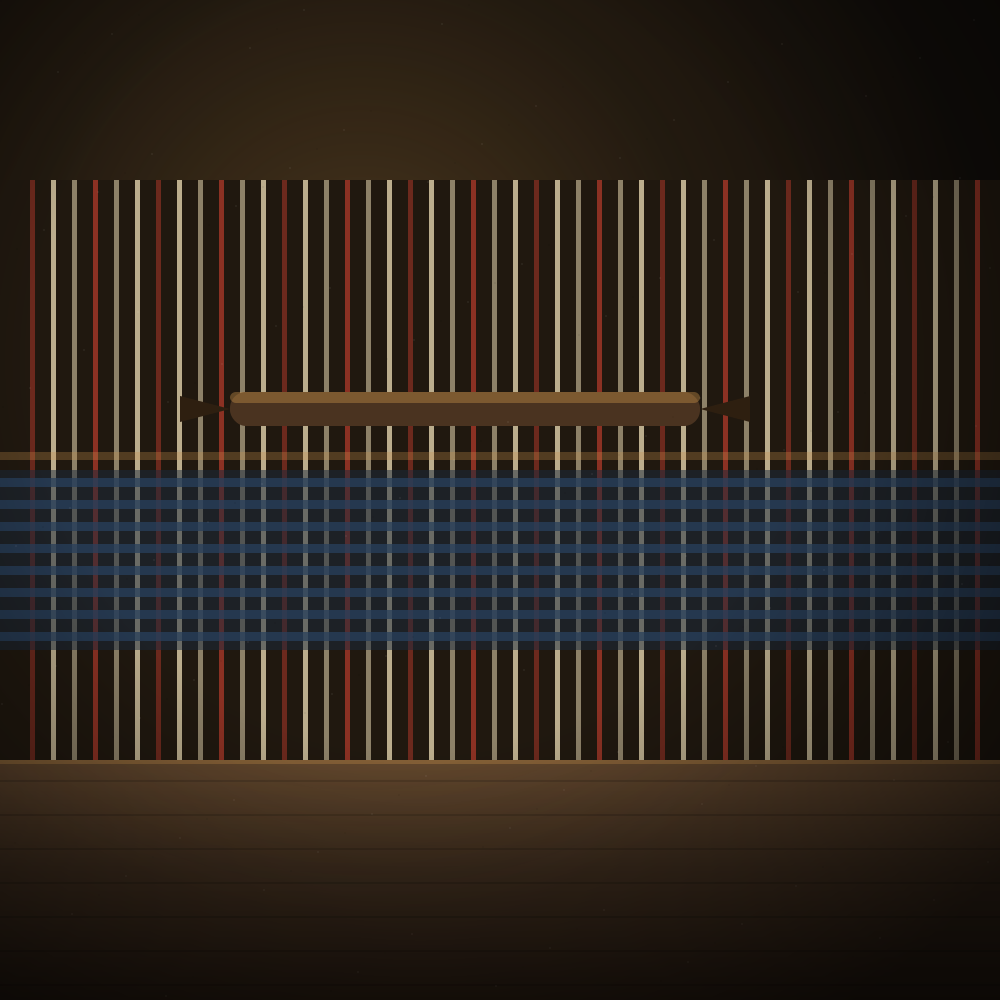
It is a flat cotton weave with no pile, which is why it can be washed and why both faces are usable. Peacocks, lamps and the occasional elephant are drawn in steps rather than curves, because the structure of the weave will not make a curve. What looks like stylisation is arithmetic.
the maker
Renuka
Weaver, 22 years, Navalgund.
She keeps a narrower border than the town standard, so that the field reads larger than it is.
This object is not yet for sale.
Join the list and we will write when the first collection opens. Once, and about that.
from the same shelf