Jaipur blue pottery jar
the object
Hold the rim up to a window and it passes a little light. There is no clay in the body. It is ground quartz bound with borax and gum, which is also why a good part of every kiln load does not survive.
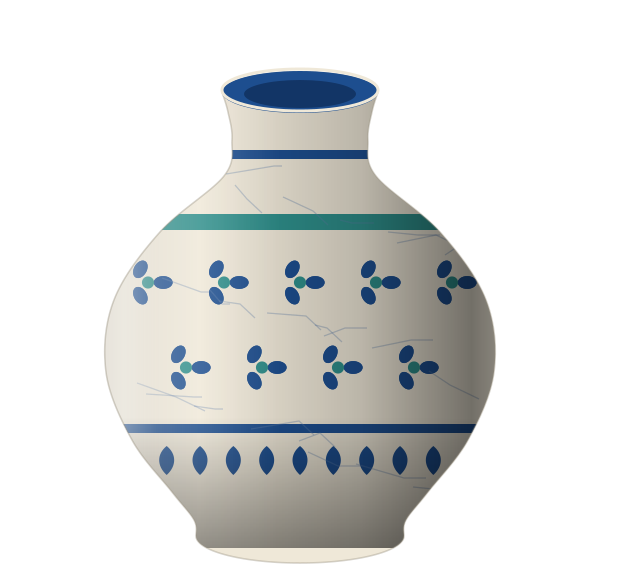
Cobalt and copper are painted onto the raw body, so the pattern sits under the glaze rather than on top of it. Nothing can rub off.
The fine crazing in the surface is the body and the glaze cooling at different rates. It is inherent to the method. Use it dry, or for flowers; do not put it in a dishwasher.
- Dimensions
- 190 mm high, 172 mm at the widest point.
- Material
- Quartz, fuller's earth, borax; cobalt glaze
- Finish
- Glazed. Faint crazing in the glaze is inherent to the body and is not a defect.
- Variation
- A large share of every firing cracks and is discarded, so the pieces that survive are not selected for uniformity. There aren't enough of them.
- Lead time
- Five weeks.
the tradition
Blue pottery
Jaipur
No clay in it at all. Closer to glass than to earthenware.
Jaipur blue pottery contains no clay at all. The body is ground quartz held together with fuller's earth, borax and gum, closer to glass than to earthenware. That is why the rim goes faintly translucent when you hold it to a window, and why so much of it cracks in the kiln.
It fires low, once. Cobalt gives the blue and copper gives the green, and both are painted onto the raw body before the glaze, so the colour is under the surface rather than on it. The technique arrived through Persia and Central Asia and settled in Jaipur in the nineteenth century under court patronage.
the maker
Mahesh
Potter, 19 years, Jaipur.
He keeps the copper green to a single band. Most workshops use more of it.
This object is not yet for sale.
Join the list and we will write when the first collection opens. Once, and about that.
from the same shelf