Molela terracotta plaque
the object
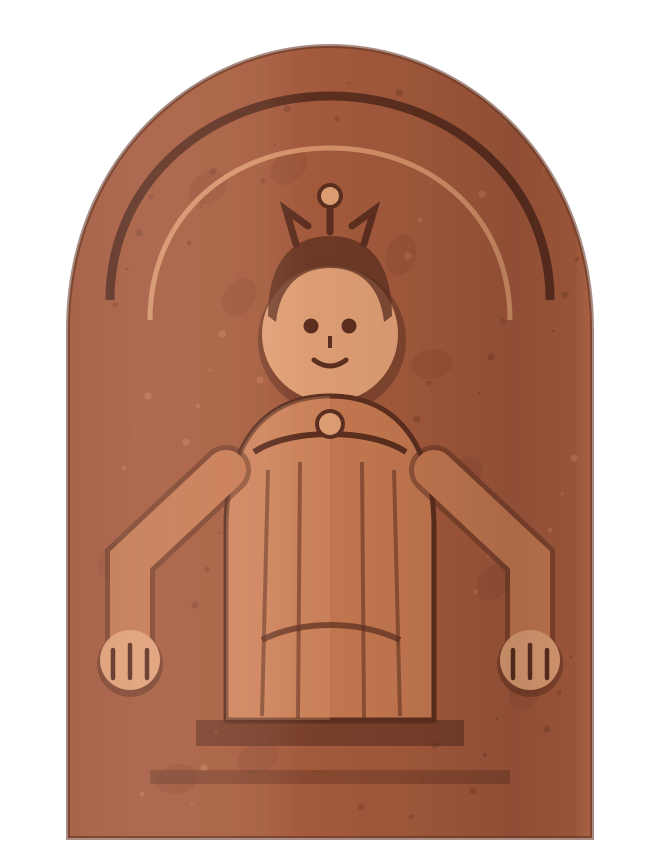
Rolled flat, then built up. The figure is applied to a sheet of clay rather than carved out of a block, which is why the back is flat and why the whole plaque weighs a fraction of what it looks like it should.
Local river clay, tempered with donkey dung. The fibre in it opens the body so steam can leave during firing. Without it a piece this size would burst in the kiln.
Unglazed and unpainted. The colour is what the fire did, and it changes across a single plaque because an open kiln does not heat evenly.
- Dimensions
- 300 × 410 mm, 40 mm deep. Flat-backed, with a fired hanging hole.
- Material
- Local river clay, donkey-dung temper
- Finish
- Unglazed, unpainted. Fired once in an open kiln.
- Variation
- Fire reaches an open kiln unevenly, so colour shifts from orange to grey-pink across a single plaque.
- Lead time
- Four weeks. Longer in the monsoon, when clay will not dry.
the tradition
Molela votive plaque
Molela
The form is the way it is because of the distance it had to travel.
Molela plaques are hollow and flat-backed rather than modelled in the round. Clay is rolled out into a sheet and the figures are applied on top of it, which does two things: the piece fires evenly instead of exploding, and it is light enough to carry a long way.
That mattered. Pastoral communities walked hundreds of kilometres to Molela, chose a plaque, and carried it back to a village shrine. The form is the way it is because of the distance it had to travel.
the maker
Kailash
Modeller, 31 years, Molela.
His figures' hands are open. Not every family in Molela models them that way.
This object is not yet for sale.
Join the list and we will write when the first collection opens. Once, and about that.
from the same shelf